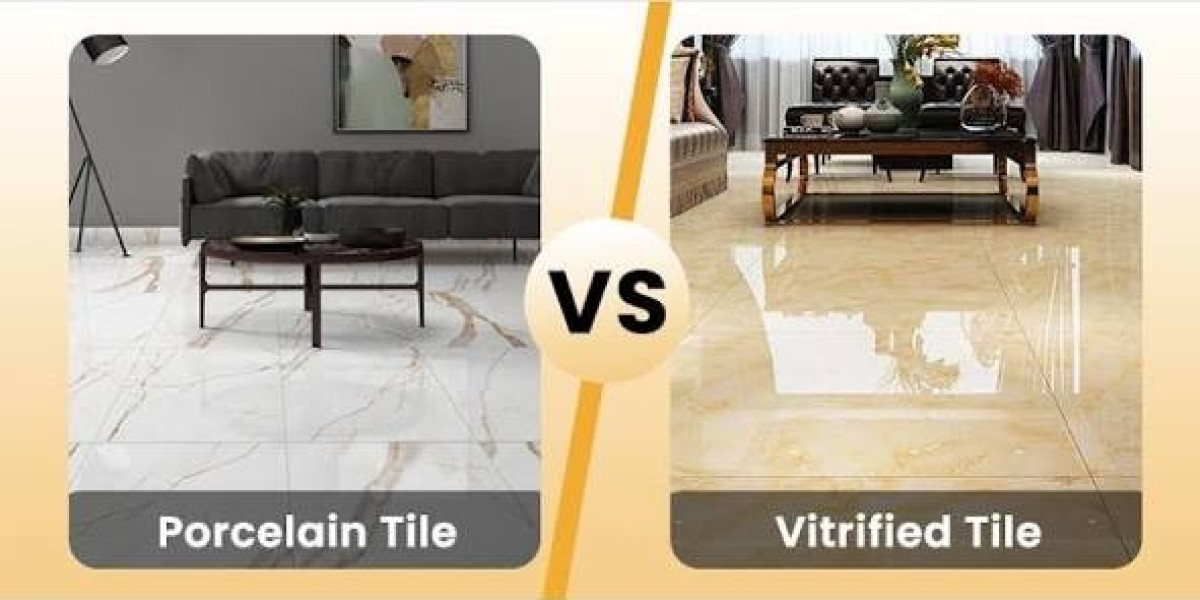

Choosing the right tiles is one of the most important decisions when designing or renovating a space. Tiles not only influence the overall appearance of your home or commercial property but also affect durability, maintenance, and long-term value. Among the most popular options today, homeowners and architects often find themselves comparing Vitrified Tiles vs Porcelain Tiles to determine which one best suits their needs.
While both tile types are known for strength, low porosity, and premium aesthetics, they are not exactly the same. Each has its own manufacturing process, performance characteristics, and ideal applications. In this detailed guide, we’ll break down everything you need to know—so you can make a confident and informed decision.
What Are Vitrified Tiles?
Vitrified tiles are made by combining clay with silica and other minerals, then firing the mixture at extremely high temperatures. This process vitrifies the tile, meaning it turns into a glass-like structure. As a result, vitrified tiles have very low water absorption, high strength, and a smooth, polished surface.
Key Features of Vitrified Tiles
Water absorption rate of less than 0.5%
High resistance to stains and scratches
Available in glossy, matte, and glazed finishes
Can mimic natural materials like marble or wood
Uniform thickness and smooth edges
Because of these features, vitrified tiles are widely used in modern homes, offices, shopping malls, and commercial spaces.
What Are Porcelain Tiles?
Porcelain tiles are a type of ceramic tile, but they are denser and stronger due to a refined manufacturing process. They are made from highly refined clay and fired at higher temperatures than standard ceramic tiles, resulting in a hard, durable surface.
Key Features of Porcelain Tiles
Extremely dense and compact structure
Water absorption rate below 0.5%
High resistance to wear and tear
Suitable for indoor and outdoor use
Available in textured, matte, and polished finishes
Porcelain tiles are often chosen for high-traffic areas and outdoor spaces due to their superior durability.
Vitrified Tiles vs Porcelain Tiles: Key Differences
Let’s compare vitrified tiles vs porcelain tiles across essential parameters to understand how they differ.
1. Manufacturing Process
Vitrified tiles are produced using a mix of clay and silica that melts into a glassy form when fired. This vitrification process gives the tile a shiny, uniform appearance.
Porcelain tiles, on the other hand, are made using refined clay and fired at even higher temperatures, making them denser and less porous.
Winner: Porcelain tiles (slightly denser and stronger)
2. Water Absorption
Both tile types have very low water absorption rates, making them suitable for moisture-prone areas.
Vitrified tiles: < 0.5%
Porcelain tiles: < 0.5% (often even lower)
This makes both ideal for kitchens, bathrooms, and outdoor spaces.
Winner: Tie
3. Strength and Durability
Porcelain tiles are known for their exceptional strength and ability to withstand heavy foot traffic. They are less prone to chipping and cracking under pressure.
Vitrified tiles are also strong but slightly less dense compared to porcelain.
Winner: Porcelain tiles
4. Design and Aesthetic Appeal
Vitrified tiles are often preferred for their glossy finish and elegant appearance. They can closely replicate natural stones like marble and granite, making them a popular choice for luxurious interiors.
Porcelain tiles offer more textured and matte finishes, which work well for rustic or contemporary designs.
Winner: Vitrified tiles (for premium aesthetics)
5. Maintenance and Cleaning
Both vitrified and porcelain tiles are low-maintenance options. Their non-porous surfaces prevent stains, moisture absorption, and bacterial growth.
Regular sweeping and mopping are usually enough to keep them clean.
Winner: Tie
6. Slip Resistance
Polished vitrified tiles can be slippery when wet, which may not be ideal for bathrooms or outdoor areas.
Porcelain tiles often come with textured or matte finishes, offering better slip resistance.
Winner: Porcelain tiles
7. Cost Comparison
Vitrified tiles are generally more affordable and available in a wide range of price points, making them suitable for budget-friendly projects.
Porcelain tiles tend to be more expensive due to higher manufacturing costs and superior durability.
Winner: Vitrified tiles (budget-friendly option)
Where Should You Use Vitrified Tiles?
Vitrified tiles are best suited for:
Living rooms and bedrooms
Offices and commercial interiors
Shopping malls and showrooms
Areas where aesthetics are a priority
Their polished finish enhances lighting and gives spaces a clean, modern look.
Where Should You Use Porcelain Tiles?
Porcelain tiles are ideal for:
High-traffic areas
Kitchens and bathrooms
Balconies and outdoor spaces
Parking areas and commercial floors
Their strength and slip resistance make them perfect for functional spaces.
Environmental Impact and Sustainability
Both vitrified and porcelain tiles are environmentally friendly options when sourced from responsible manufacturers. Their long lifespan reduces replacement frequency, minimizing waste over time.
Additionally, many modern tiles are produced using recycled materials and energy-efficient processes.
Installation Considerations
Porcelain tiles are denser and harder, which makes cutting and installation slightly more challenging. Professional installation is often recommended.
Vitrified tiles are easier to install and allow for quicker project completion.
How to Choose Between Vitrified Tiles vs Porcelain Tiles
When deciding between vitrified tiles vs porcelain tiles, consider the following factors:
Budget: Choose vitrified tiles for cost-effective elegance
Usage Area: Opt for porcelain tiles in high-traffic or wet areas
Design Preference: Vitrified tiles for glossy luxury, porcelain for textured practicality
Safety Needs: Porcelain tiles offer better slip resistance
There is no one-size-fits-all answer—the right choice depends on your specific needs and lifestyle.
Conclusion
Both vitrified tiles and porcelain tiles are excellent flooring solutions, each offering unique benefits. Vitrified tiles shine in terms of affordability, design variety, and polished aesthetics, making them ideal for interior spaces. Porcelain tiles stand out for their superior durability, slip resistance, and suitability for high-traffic and outdoor areas.
Understanding the differences between vitrified tiles vs porcelain tiles helps you make a smarter investment—one that balances beauty, performance, and long-term value. By choosing the right tile for the right space, you ensure both functionality and style for years to come.