
In industries where precision is non-negotiable, even the smallest bearing error can lead to major operational problems. Excessive play, uneven load distribution, and poor rigidity often result in positioning inaccuracies, vibration, and early component wear. These issues directly affect product quality, machine reliability, and overall production efficiency.
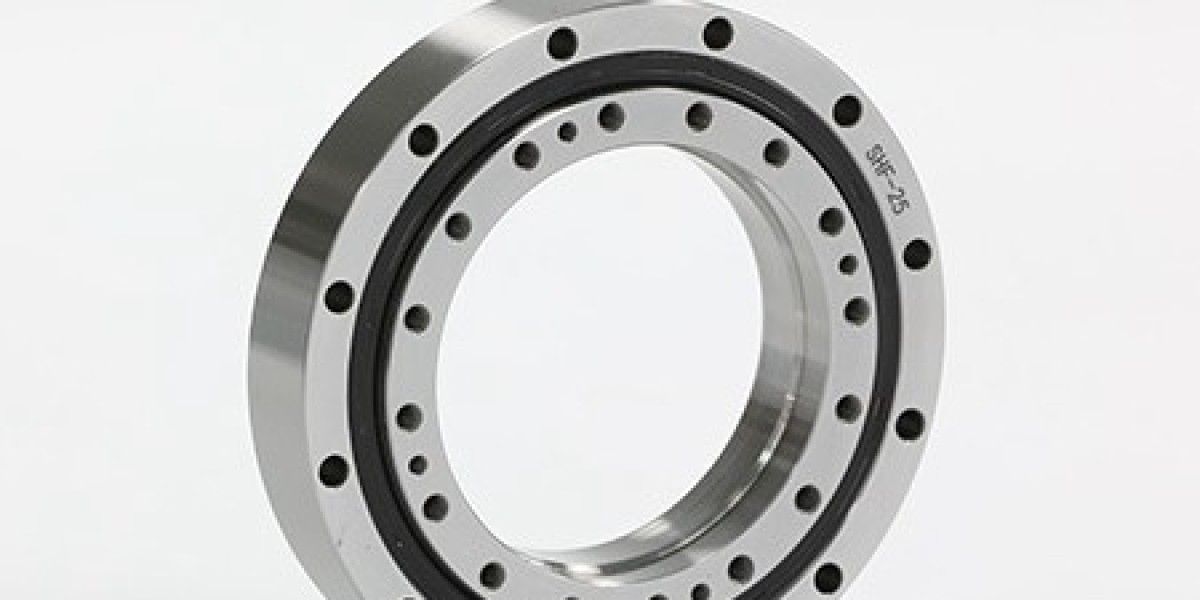
One of the most effective solutions for eliminating these problems is the use of a properly engineered cross roller bearing, specifically designed to deliver high rigidity and precise motion control under complex load conditions.
Why Conventional Bearings Fail in Precision Applications
Standard ball or cylindrical roller bearings are typically designed to handle either radial or axial loads, not both at the same time with equal efficiency. In applications such as rotary tables, robotic joints, and machine tool spindles, loads are applied from multiple directions simultaneously.
This mismatch often leads to deformation, reduced stiffness, and compromised accuracy. Cross roller bearings solve this issue by arranging cylindrical rollers in a perpendicular, crisscross pattern, allowing the bearing to support radial, axial, and moment loads within a single compact structure.
How Cross Roller Bearings Deliver Superior Rigidity and Stability
Machine rigidity plays a critical role in maintaining positioning accuracy and repeatability. Cross roller bearings provide exceptionally high stiffness because each roller is in linear contact with the raceway rather than point contact.
By integrating a high-precision cross roller bearing, equipment manufacturers and maintenance teams can significantly reduce deflection and vibration. This results in smoother motion, tighter tolerances, and consistent performance—even under heavy or offset loads.
Reducing Downtime Caused by Wear and Misalignment
Unplanned downtime often stems from bearing wear caused by uneven load distribution or poor alignment. Once a bearing begins to degrade, it can quickly affect surrounding components, leading to costly repairs and extended shutdowns.
Cross roller bearings are engineered to distribute loads evenly across the rollers, minimizing localized stress and wear. Their design also simplifies installation by replacing multiple bearing arrangements with a single integrated solution, reducing alignment errors and maintenance complexity.
Supporting Compact Designs Without Compromising Performance
Space constraints are a common challenge in modern machinery design. Many high-precision systems require compact components without sacrificing load capacity or rigidity.
Cross roller bearings excel in these situations. Their slim profile and integrated load-handling capability allow engineers to design smaller, lighter systems while maintaining high performance standards. This makes them ideal for applications such as medical imaging equipment, semiconductor manufacturing, automation systems, and aerospace components.
Why Bearing Quality Matters for Long-Term Reliability
Not all cross roller bearings offer the same level of performance. Manufacturing precision, material selection, and surface finishing directly influence bearing lifespan and operational stability.
Choosing a high-quality cross roller bearing ensures consistent motion control, extended service life, and reduced risk of unexpected failure. For businesses that rely on precision equipment, this reliability protects productivity, product quality, and long-term profitability.