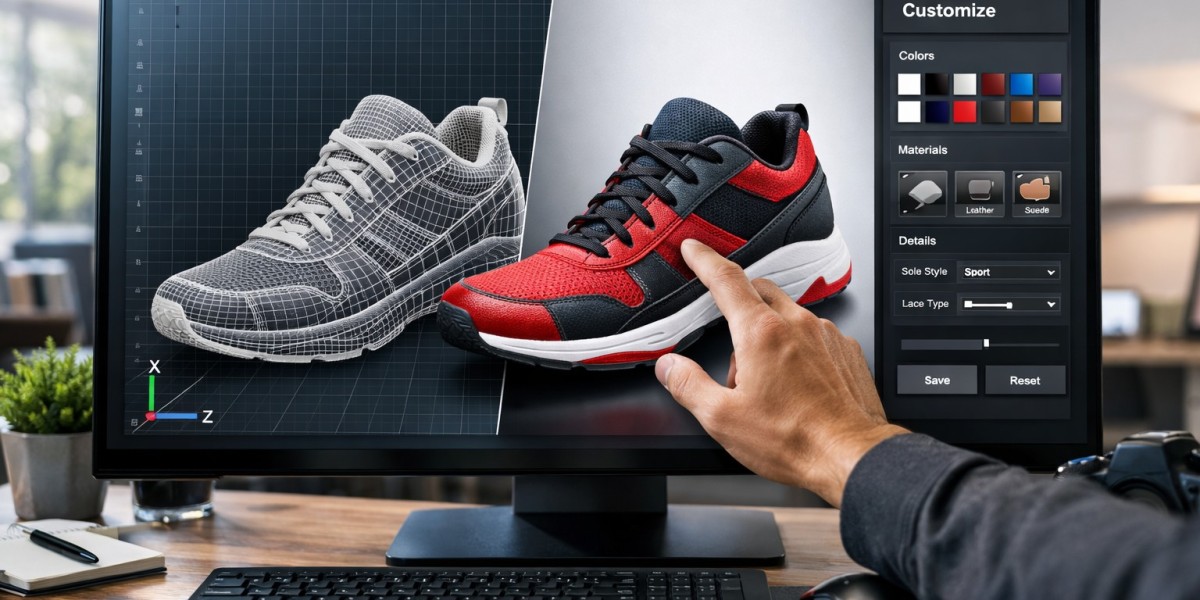

The digital marketplace has undergone a profound transformation over the past decade, with customer expectations shifting dramatically toward personalized experiences and interactive engagement. At the heart of this revolution stands the 3D product configurator, a technology that has fundamentally changed how businesses approach product customization and how consumers create personalized products. This comprehensive exploration examines how 3D product configurators are revolutionizing customization across industries, transforming business models, and reshaping the future of commerce.
The Evolution of Product Customization
To appreciate the revolutionary impact of 3D product configurators, we must understand the historical context of product customization and the limitations that preceded current technologies.
Traditional Customization Challenges plagued businesses and customers for decades. Before digital tools, customization required in-person consultations where customers attempted to communicate preferences verbally to sales representatives. These representatives interpreted requests, often imperfectly, and translated them into specifications for manufacturing. The process proved time-consuming, expensive, and prone to miscommunication, which led to disappointing results.
Early digital attempts at customization offered limited improvements. Web forms with dropdown menus and checkboxes allowed remote specification, but customers still faced the fundamental challenge of imagining how their selections would combine. Choosing "midnight blue" from a list and selecting "premium leather" from another menu required significant mental visualization, as customers had to imagine the final product without seeing it.
The Visualization Gap represented the most significant barrier to effective customization. Humans struggle to accurately visualize how multiple choices combine, especially when dealing with colors, materials, and proportions. This imagination gap created uncertainty that prevented many customers from attempting customization at all, while others who did customize frequently experienced disappointment when physical products didn't match their mental images.
Product photography offered partial solutions but faced scalability challenges. Photographing every possible configuration variation quickly became impractical as customization options expanded. A product with just five color choices, three material options, and two size variations required thirty distinct photo shoots. Add more variables, and the photography requirements became prohibitively expensive and logistically impossible.
How 3D Product Configurators Transform Customization
The 3D product configurator addresses these historical limitations through interactive product visualization that makes customization accessible, confident, and enjoyable for customers while remaining operationally efficient for businesses.
Real-Time Visual Feedback represents the most transformative aspect. As customers select options through intuitive interfaces, the 3D model updates instantly, showing exact results within milliseconds. This immediate product visualization eliminates the imagination gap customers see precisely how their choices combine rather than attempting mental visualization.
The rendering quality of modern configurators approaches and often exceeds professional photography. Photorealistic materials display authentic textures, realistic lighting creates natural shadows and highlights, and accurate color representation ensures what customers see matches what they'll receive. This visual fidelity builds confidence that customization will deliver satisfying results.
Interactive Exploration enables customers to examine configured products from every angle. Rotate products freely, zoom into details, and inspect from perspectives impossible in traditional photography. This comprehensive visual access through 3D product customization replicates the thorough examination customers perform with physical products, building understanding and confidence digitally.
The interactivity creates engagement impossible with static presentations. Customers spend significantly more time exploring products through configurators compared to viewing standard product pages. This extended engagement builds emotional investment in customers who invest time creating personalized configurations, develop attachment before purchasing, increasing commitment and satisfaction.
Intelligent Guidance helps customers navigate complex customization options without feeling overwhelmed. Configuration logic engines validate selections in real-time, preventing invalid combinations and suggesting complementary features. When selecting certain options requires or excludes others, the system manages these relationships automatically through product customization interfaces.
Progressive disclosure presents options in logical sequences, making foundational decisions first that filter subsequent choices. This structured approach prevents overwhelming customers with hundreds of simultaneous options, instead guiding them through manageable decision stages. The intelligence built into modern 3D product configurators makes complex customization feel approachable rather than intimidating.
Industry-Specific Revolutionary Impact
While 3D product configurators revolutionize customization broadly, specific industries experience particularly transformative effects tailored to their unique characteristics and challenges.
Automotive Industry Transformation demonstrates perhaps the most visible revolution. Vehicle purchasing traditionally required dealership visits, limited inventory selection, and significant compromise between desired features and available configurations. The 3D product configurator completely reimagines this experience.
Customers now spend hours at home exploring vehicles through sophisticated product visualization, experimenting with exterior colors, wheel designs, interior materials, and technology packages. Every selection updates photorealistic 3D models showing exact results. This extensive pre-purchase customization builds deep product knowledge and strong preferences before dealer interactions.
The business model shift proves equally revolutionary. Rather than maintaining expensive inventory covering numerous vehicle configurations based on predictions, manufacturers increasingly operate build-to-order models where customers configure exact specifications through 3D product customization tools, and factories produce accordingly. This demand-driven production reduces inventory costs while ensuring customer satisfaction through perfect specification matches.
Furniture and Home Decor Revolution democratized custom furniture that was previously accessible only to affluent customers working with specialized craftspeople. Modern furniture configurators offer extensive customization dimensions, arm styles, leg finishes, fabric selections across hundreds of choices, cushion firmness, and decorative details, all visualized through interactive product customization.
The augmented reality integration in furniture configurators proves particularly revolutionary. After configuring ideal pieces through 3D product visualization, customers use smartphone cameras to view configured furniture in their actual rooms at true scale. This spatial understanding eliminates concerns about fit and aesthetic compatibility that previously prevented online furniture purchasing.
Manufacturing transformations accompany customer-facing innovations. Furniture factories now operate more like assembly lines for unique configurations than traditional batch production. Computer-aided manufacturing equipment receives specifications directly from customer configurators, producing customized pieces efficiently at scale. This manufacturing flexibility enables mass customization,n combining personalization with affordability.
Fashion and Footwear Personalization reaches new heights through 3D product configurators, enabling customers to design unique items expressing individual style. Athletic footwear companies pioneered custom programs where customers design colorways, select materials, and add personalized text, all visualized through real-time product customization rendering.
The social dimension of fashion configurators amplifies their impact. Customers creating unique designs naturally want to share their creations on social media. Integrated sharing features transform customers into brand ambassadors, posting configured designs that showcase both products and the creative tools enabling personalization. This user-generated content provides authentic marketing while building communities around creative product customization.
Manufacturing innovations support fashion customization through digital printing, automated cutting systems, and flexible assembly processes, producing one-off designs alongside mass-produced models. The 3D product configurator bridges creative customer visions with industrial production capabilities, making personalized fashion accessible at reasonable prices and delivery timelines.
Industrial Equipment and B2B Applications demonstrate thatthe customization revolution extends beyond consumer markets. Complex industrial products involve extensive technical specifications with intricate interdependencies between components. The 3D product configurator manages this complexity while making technical customization accessible to customers without deep engineering expertise.
Industrial configurators validate technical compatibility automatically, ensuring selected components work together properly. Performance calculations happen in real-time as customers configure equipment, systems calculate throughput, power requirements, spatial footprints, and other technical parameters. This intelligent product customization prevents specification errors while helping customers understand how choices affect performance.
The product visualization for industrial equipment helps customers understand spatial requirements and installation considerations. Three-dimensional models show equipment dimensions, service access points, utility connections, and integration with existing systems. This comprehensive understanding through 3D product customization prevents costly installation surprises while facilitating informed purchasing decisions.
The Technology Enabling the Revolution
Understanding the technological foundations reveals why 3D product configurators enable customization previously impossible or impractical.
Advanced 3D Modeling creates digital product representations with accuracy and detail sufficient for photorealistic rendering. Professional 3D artists build models capturing precise dimensions, proper proportions, and realistic details. These digital assets must be optimized for web performance, balancing visual quality with rendering speed ensures smooth interactive product customization experiences.
Material libraries define how surfaces appear under various lighting conditions. Physically-based rendering uses material properties like metalness, roughness, and reflectivity to simulate an authentic appearance. When customers select leather upholstery through product customization interfaces, the system applies appropriate material properties, creating a realistic leather visualization.
Real-Time Rendering Engines transform 3D models and material selections into photorealistic images that customers see during configuration. Modern engines leverage graphics processing unit power for parallel computation, calculating lighting, applying textures, and generating millions of pixels simultaneously. This computational power enables instant visual updates as customers modify configurations through 3D product visualization tools.
Rendering techniques like global illumination simulate realistic lighting where light bounces between surfaces, creating natural shadows and ambient lighting. Ray tracing calculates accurate reflections and refractions. These sophisticated methods produce product customization visuals approaching photographic quality while updating in real-time as customers make selections.
Configuration Logic Systems encodes the product rule,s ensuring customers create valid configurations. Rule engines evaluate option compatibility, enforcing relationships where certain selections require or exclude others. For automotive product customization, selecting particular engines might require specific transmissions while excluding others. The logic system manages these constraints automatically.
The intelligence extends to suggestions and recommendations. When customers select options that commonly pair with specific features, smart configurators can suggest those additions. This guidance through 3D product customization improves customer outcomes while increasing transaction values through appropriate upselling that feels helpful rather than pushy.
Integration Architecture connects customer-facing configurators with backend business systems. APIs link configuration data with pricing engines, calculating costs based on selected options. Inventory systems check component availability. Manufacturing systems receive specifications for production. Customer relationship management platforms capture configuration activity as engagement data. This integration creates digital threads from customer product customization through order fulfillment.
Business Model Innovation Through Customization
The revolutionary capabilities of 3D product configurators enable entirely new business models that were previously impractical or impossible.
Mass Customization combines individual personalization with mass production efficiency. Traditional manufacturing operated on economies of scale,e producing large quantities of identical items, which reduced per-unit costs. Customization traditionally meant expensive bespoke production. The 3D product configurator enables mass customization, bridging these extremes.
Digital workflows from customer configuration through automated manufacturing allow producing customized items efficiently. Computer-aided manufacturing equipment receives specifications directly from product customization tools, producing unique items without manual setup for each variation. This manufacturing flexibility makes personalization accessible at reasonable prices.
The economic advantages prove substantial. Rather than maintaining inventory covering numerous pre-configured variations, businesses produce items according to actual customer specifications. This build-to-order model reduces inventory carrying costs, eliminates discounting unsold configurations, and ensures customers receive exactly what they specified through 3D product customization.
Direct-to-Consumer Models flourish with configurator technology, enabling effective online customization and ordering. Traditional retail channels involved multiple intermediaries between manufacturers and customers. The 3D product configurator facilitates direct relationships where customers configure products onthe anufacturer's website,s and orders flow directly to production.
This disintermediation benefits both parties. Manufacturers capture retail margins while gaining direct customer relationships and behavioral data from product customization sessions. Customers access broader customization options than retailers typically stock, while often enjoying lower prices from eliminated intermediary costs.
Subscription and Upgrade Models leverage configurators for ongoing customer relationships beyond single transactions. Customers might configure initial products, then return periodically to customize upgrades, additions, or replacements. The configuration history enables personalized recommendations based on previous selections and preferences demonstrated through product customization behaviors.
Some businesses offer configuration-as-a-service where customers regularly refresh customization,s seasonal color changes, periodic upgrades, or style updates. This recurring revenue model builds ongoing relationships compared to one-time transactions, increasing customer lifetime value while providing steady revenue streams.
Data Intelligence Revolutionizing Strategy
Beyond enabling customer customization, the 3D product configurator generates valuable behavioral intelligence, revolutionizing how businesses make strategic decisions.
Preference Analytics reveal authentic customer desires through actual behaviors rather than stated preferences. Which colors do customers explore most? What feature combinations appear frequently? Which premium options command selection despite higher prices? This behavioral data from product customization sessions provides market intelligence more reliable than surveys or focus groups.
Product development informed by configuration analytics focuses on features customers demonstrate they want. Rather than guessing which innovations will succeed, businesses observe which options generate interest and selection through 3D product customization tools. This evidence-based development reduces failure rates while accelerating successful product introduction.
Predictive Modeling uses historical configuration patterns to forecast future demand and preferences. Machine learning algorithms identify correlations between exploration behaviors and eventual purchases. Time series analysis spots emerging trends before they fully manifest in sales data. These predictive capabilities through product customization intelligence enable proactive strategies rather than reactive responses.
Demand forecasting accuracy improves substantially when incorporating configuration data. Understanding which options customers actually order versus theoretical possibilities helps optimize inventory and component procurement. Production planning benefits from advanced insight into coming demand patterns revealed through 3D product visualization analytics.
Customer Segmentation becomes behaviorally-based rather than demographically-assumed. Traditional segmentation grouped customers by age, location, or income. Configuration data enables segmentation by actual preferences and behavior, with customers prioritizing performance versus those focused on luxury, or value-oriented buyers versus those willing to pay premiums for premium features.
These behavioral segments through product customization patterns prove more predictive of purchasing behavior than demographic proxies. Marketing targeting these segments with relevant messages resonates because it addresses demonstrated preferences rather than assumed characteristics.
Operational Excellence Through Customization Technology
The revolution extends beyond customer experiences into operational improvements throughout businesses implementing 3D product configurators.
Order Processing Automation eliminates manual data entry and verification, saving time while reducing errors. Customer configurations flow directly from product customization interfaces into order management systems with complete, accurate specifications. This automation reduces processing costs by 50-70% in many implementations while virtually eliminating specification errors.
Manufacturing Efficiency improves when production systems receive complete configuration data. Assembly instructions reflect exact customer specifications from 3D product configurators. Quality control validates that delivered products match configured specifications precisely. The digital thread from customer selection through manufacturing delivery reduces defects and rework while ensuring customer expectations set by product visualization are met by physical products.
Supply Chain Optimization benefits from configuration intelligence, revealing which components customers actually select. Rather than stocking parts for every theoretical configuration, businesses optimize inventory around popular selections while sourcing less common components as needed. This data-driven approach through product customization analytics reduces working capital requirements while maintaining customer service levels.
Customer Service Enhancement occurs when support teams access complete configuration records. Representatives see exact customer specifications, understanding precisely what was ordered and delivered. This visibility enables specific, relevant assistance rather than generic troubleshooting. The self-service enabled by comprehensive 3D product customization reduces support volume as customers answer their own questions through interactive exploration.
Overcoming Implementation Challenges
While 3D product configurators revolutionize customization, successful implementation requires addressing several challenges and considerations.
Quality Standards for product visualization must meet or exceed customer expectations set by brand photography and design materials. Subpar 3D models or rendering undermine credibility regardless of configurator functionality. Investment in exceptional visual assets proves essential, asl quality directly impacts customer confidence and purchase decisions.
Performance Optimization ensures smooth experiences across devices despite sophisticated rendering requirements. Customers expect instant responsiveness during product customization regardless of whether they use powerful desktop computers or modest smartphones. Achieving this performance requires extensive optimization of efficient 3D models, texture compression, progressive loading, and rendering algorithms, balancing quality with speed.
User Experience Design determines whether customers find configurators intuitive or frustrating. Well-designed interfaces guide customers naturally through product customization processes with logical organization, clear labeling, and helpful feedback. Poor designs create confusion and abandonment despite impressive technical capabilities. Investment in user experience research and iterative design proves to be as important as visual quality.
Integration Complexity challenges businesses as 3D product configurators must connect with numerous backend systems, including pricing engines, inventory management, manufacturing execution, order processing, and customer service platforms. Building and maintaining these integrations requires significant technical expertise and ongoing attention as systems evolve. However, the operational benefits from integration justify the complexity.
Change Management addresses organizational adaptation requirements. Configurators change workflows, responsibilities, and processes across sales, engineering, manufacturing, and customer service functions. Success requires helping employees understand changes, develop new skills, and embrace new ways of working. Resistance undermines even excellent technology, making change management critical for realizing configurator benefits.
The Future of Customization Revolution
The revolution in customization through 3D product configurators continues accelerating as technologies mature and new capabilities emerge.
Artificial Intelligence Enhancement will make configurators increasingly intelligent and personalized. AI algorithms will recommend optimal configurations based on stated preferences and similar customer behaviors. Generative design might create custom variations within brand guidelines based on customer objectives. Natural language interfaces could enable conversational customization, describing preferences and seeing relevant product visualization instantly.
Extended Reality Integration will extend product customization into immersive experiences. Virtual reality will create showrooms where customers configure and experience products at full scale in simulated environments. Augmented reality will seamlessly blend configured products into actual spaces through smartphone or glasses displays. These immersive technologies will further enhance the 3D product configurator revolution.
Sustainability Integration will add environmental transparency to customization decisions. Future configurators might display carbon footprints, material sourcing information, and lifecycle environmental impacts for different options. This transparency will enable environmentally conscious product customization where customers make ethical choices aligned with values during configuration.
Collaborative Configuration will enable shared experiences where friends, family, or business partners configure products together despite physical separation. Real-time synchronization will show identical views to all participants, facilitating discussion and consensus. This social product customization will transform individual activities into collaborative experiences, strengthening relationships and improving decisions.
Measuring Revolutionary Impact
The revolutionary claims about 3D product configurators require validation through measurable business outcomes demonstrating tangible value.
Conversion Rate Improvements consistently appear across implementations, with typical increases of 25-60% when comparing products with configurators versus static presentations. The confidence and engagement built through interactive product customization directly drives purchase decisions, validating the revolution in customer experience.
Average Order Value Growth of 20-40% commonly occurs as engaged customers select premium options and enhancements through product visualization experiences. The exploratory nature of configuration encourages considering upgrades that static presentations might not effectively communicate.
Return Rate Reductions of 30-50% demonstrate that accurate 3D product customization sets proper expectations. When delivered products match photorealistic visualizations customers examined, satisfaction soars while returns plummet. The cost savings from reduced reverse logistics alone often justify configurator investments.
Customer Satisfaction Scores improve measurably following configurator implementations. Post-purchase surveys show higher satisfaction among customers who used product customization tools versus those purchasing through traditional methods. Net Promoter Scores similarly increase as satisfied customers become brand advocates.
Market Share Gains appear as businesses offering superior 3D product configurators attract customers from competitors still using traditional approaches. The customization capability itself becomes a competitive differentiator, while the superior experience builds loyalty,y preventing customer defection.
Conclusion
The 3D product configurator genuinely revolutionizes customization by transforming it from a niche, expensive service into an accessible, engaging experience available to all customers. Through photorealistic product visualization, intelligent guidance, and seamless integration with business operations, configurators address historical limitations that constrained customization while enabling entirely new business models and customer relationships. The revolution extends beyond technology into culture, re-changing customer expectations about personalization, business approaches to manufacturing and inventory, and industry standards for digital experiences. As technologies continue advancing and adoption spreads, the customization revolution will only accelerate, making 3D product configurators essential infrastructure for businesses competing in markets where personalization defines success. Organizations embracing this revolution position themselves at the forefront of commerce evolution, while those hesitating risk irrelevance as customization transitions from luxury to expectation across product categories and customer segments.