
The world of defense manufacturing is often thought of as a slow-moving giant. For decades, the process was defined by massive factories, multi-year contracts, and equipment so expensive that losing even a single unit was a strategic setback. But as the landscape of global security shifts, that old model is starting to show its age. The need for speed, adaptability, and "affordable mass" has never been greater.
Firestorm Labs, a San Diego-based tech firm, is stepping into this gap with a vision that feels more like Silicon Valley than a traditional defense contractor. They aren’t just building better aircraft; they are building a way to build them anywhere. By combining 3D printing with a modular design philosophy, they are proving that the future of aerospace isn’t just in the air—it’s in the shipping container sitting right next to the runway.
Moving Beyond the Logistics Nightmare
The biggest challenge in modern operations isn't usually a lack of technology; it’s the logistics. When a specialized part breaks in a remote area, the mission often stops while everyone waits for a replacement to be shipped from a central facility thousands of miles away. Firestorm Labs calls this the "logistics tail," and their goal is to cut it off.
Their approach relies on distributed manufacturing. Instead of relying on one massive plant, they advocate for a network of "micro-factories." By using high-performance 3D printing, they can produce complex airframes and components on demand. This shift turns a sprawling, vulnerable supply chain into a simple digital file. If you need a new drone, you don't wait for a shipment; you hit "print."
Modular by Design: The Lego Set for the Sky
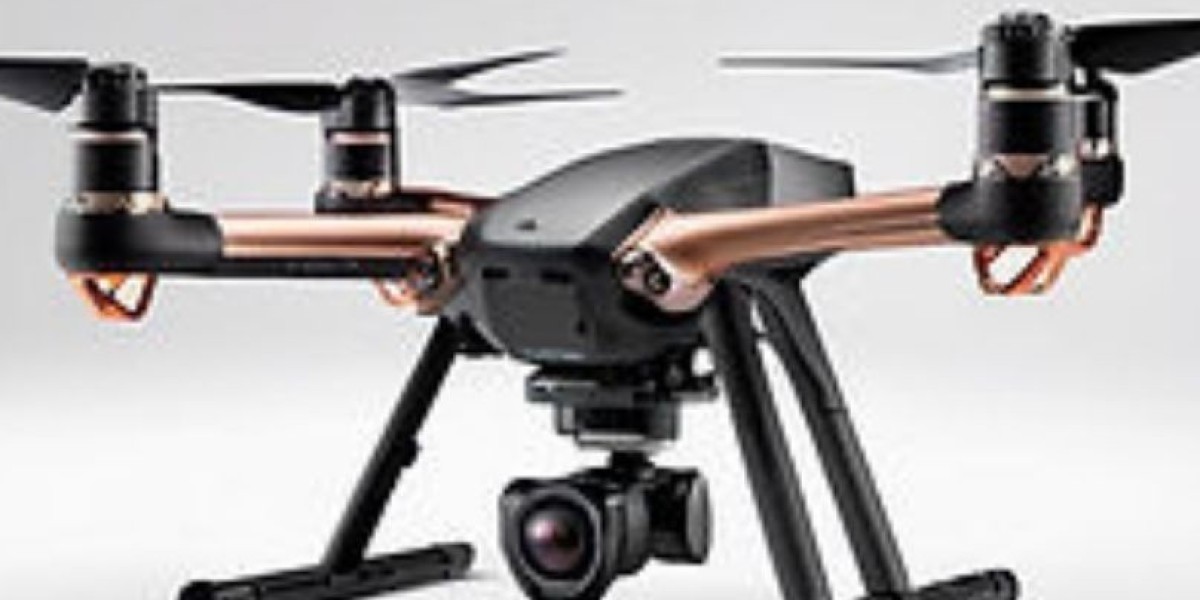
At the heart of Firestorm's lineup is the Tempest, a platform designed with an "open architecture." Most drones are built for one specific job—either they are for scouting, or they are for carrying cargo, or they are for strike missions. If you want to change the mission, you usually have to change the aircraft.
The Tempest flips this script. It’s designed like a set of high-tech building blocks. The wings, the fuselage, and the internal sensors can be swapped out in the field in a matter of minutes. If the morning requires a long-endurance flight for surveillance, you snap on the long wings. If the afternoon requires a high-speed mission, you reconfigure the propulsion. This level of flexibility ensures that the person on the ground always has the exact tool they need for the moment.
The Factory in a Box
Perhaps the most talked-about innovation from Firestorm is the xCell. Imagine a pair of standard shipping containers that, once opened, reveal a semi-automated production line. This is what the company calls an "expeditionary manufacturing cell."
Inside the xCell, industrial-grade 3D printers—specifically the Multi Jet Fusion technology through a partnership with HP—work alongside robotic assembly arms. This setup can churn out up to 50 mission-ready aircraft a month. It is a total shift in how we think about production. Drone technology has reached a point where we can now deploy a "portable drone factory" directly to a disaster relief zone or a forward operating base. This allows units to maintain their own fleets and iterate on designs based on the specific terrain and weather they are facing that very day.
Democratizing the Skies
Firestorm often talks about "democratizing the fight." What they mean is making advanced technology accessible and affordable. By using 3D printing and modularity, they’ve managed to produce systems at roughly one-fifth the cost of traditional methods.
This affordability changes the strategy. When a platform is relatively low-cost and can be replaced in hours, it becomes "attritable." This means commanders can take the kind of risks that are impossible with a multi-million dollar aircraft. It moves the focus away from protecting the machine and puts it back on achieving the mission. It’s about having the "mass" to stay in the game without breaking the budget.
A Culture of Rapid Iteration
Walking through the offices of Firestorm Labs, you get the sense that they are in a hurry—and for good reason. The team is comprised of experts who have lived through the frustrations of slow procurement and rigid hardware. They operate with 30-day product cycles, constantly tweaking and improving their designs based on real-world feedback.
This isn't just about being fast for the sake of it. In a world where threats evolve every week, the technology used to counter them has to evolve just as quickly. By keeping their hardware "software-defined" and their manufacturing local, Firestorm is ensuring that the U.S. and its allies can stay one step ahead of the curve.
Conclusion
Firestorm Labs is more than just a drone company; they are a logistics company that happens to fly. By breaking down the walls of the traditional factory and putting the power of production in the hands of the operator, they are setting a new standard for the industry. Their blend of modularity, 3D printing, and mobile manufacturing is proving that resilience comes from decentralization. As they scale up their production and continue to partner with global tech leaders, they are ensuring that the future of flight is built exactly where it is needed most.
Frequently Asked Questions
What is Firestorm Labs' main product?
Their primary platform is the Tempest, a modular drone that can be easily reconfigured for different missions. They also produce the xCell, which is the mobile manufacturing unit used to build these drones on-site.How fast can they build a drone?
Using the xCell system, an airframe can be printed and assembled in hours rather than weeks. The system is capable of producing about 50 Group 2 drones per month.Can these drones be used for non-military purposes?
Absolutely. While they have strong defense contracts, the technology is perfect for humanitarian aid, search and rescue, and disaster relief. The ability to print medical supply carriers or mapping drones on-site is a game-changer for first responders.What makes their 3D printing special?
They use HP's Multi Jet Fusion technology, which allows for industrial-strength polymer parts that are both lightweight and durable. This ensures the drones can handle the heat, wind, and stress of real-world operations.Is the software hard to learn?
No, they focus on an "operator-first" design. Their core flight computer, OCTRA, handles the complex flight management, making it easy for non-technical personnel to launch and manage mission-ready aircraft.