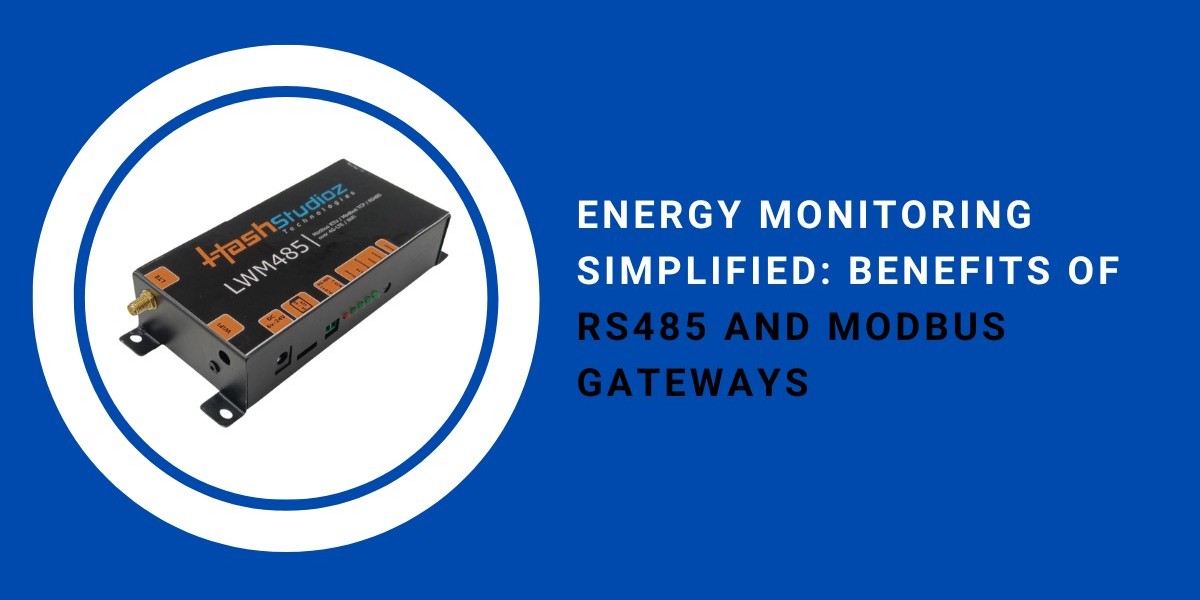

Energy monitoring is vital for modern electrical systems. As organizations demand higher efficiency and tighter control, they rely on accurate data collection and communication. Devices such as RS-485 Modbus Gateway and Modbus Gateway play a key role in delivering reliable and scalable energy monitoring solutions.
In this article, we will explore how gateways simplify energy monitoring. We will cover technical concepts, benefits, real-world applications, and industry facts. You will learn why these systems matter and how they enhance control in industrial, commercial, and residential projects.
What Is Energy Monitoring?
Energy monitoring refers to tracking electrical data across systems. It collects voltage, current, power, and energy usage in real time. Engineers use this data to optimize electrical performance and reduce waste.
A typical energy monitoring setup includes:
Sensors and meters
Communication devices
Software for data analysis
Accurate data helps reduce operating costs and improves system reliability. In large facilities, energy monitoring can reduce electricity costs by over 10–30%.¹
Key Communication Challenges in Energy Monitoring
Energy monitoring systems need stable communication. There are several challenges:
Distance: Long wiring may degrade signals.
Interference: Electric noise can corrupt data.
Device Diversity: Equipment from different brands uses different protocols.
Data Volume: High data frequency requires efficient communication.
To overcome these challenges, systems must use robust communication standards. This is where RS-485 and Modbus protocols become essential.
Understanding RS-485 Communication
RS-485 is a wired communication standard. It supports long-distance data transmission and multiple devices.
1. Technical Features of RS-485
Differential signal reduces noise.
Supports up to 1200 meters (4000 feet) communication.
Allows up to 32 devices on one network branch.
Works well in industrial environments.
RS-485 uses balanced lines, making it less prone to electrical interference. This property makes it ideal for energy systems that operate in noisy environments.
2. Advantages Over Other Methods
RS-485 outperforms traditional serial methods like RS-232. It supports multi-drop connections, meaning many devices share one bus. Devices such as power meters, inverters, and sensors can connect easily.
What Is Modbus Protocol?
Modbus is a communication protocol used for industrial automation.
1. Modbus Basics
Developed in 1979 by Modicon (now Schneider Electric).
It is open and widely accepted.
Works over RS-485, Ethernet, and other physical layers.
Modbus defines how data is transferred and structured. It uses simple request-response messaging. A master device asks for data, and the slave sends a response.
2. Modbus Message Format
A typical message contains:
Address
Function code
Data
Error check
This simplicity makes Modbus easy to implement and debug.
3. Common Modbus Versions
Version | Medium | Typical Use |
Modbus RTU | RS-485 | Most common in energy monitoring |
Modbus RTU is widely used because it uses binary data with checksums. This improves efficiency and reliability.
The Role of Gateways in Energy Monitoring
A gateway acts as a bridge between different communication systems. In energy systems, gateways translate signals and messages.
What Is an RS-485 Modbus Gateway?
An RS-485 Modbus Gateway connects devices using RS-485 and forwards data to another system. For example, a gateway can:
Convert RS-485 signals to Ethernet (TCP/IP)
Allow a SCADA or cloud-based system to read RS-485 devices
Gateways act as translators. They allow devices that speak one protocol to communicate with systems that speak another.
What Is a Modbus Gateway?
A Modbus Gateway can handle Modbus messages over different media. It can:
Translate Modbus RTU to Modbus TCP
Convert Modbus to other protocols like BACnet, MQTT, or DNP3
Enable integration with IoT platforms
Modbus Gateways make systems flexible and open future connectivity options.
Why Use RS-485 Modbus Gateways for Energy Monitoring?
1. Reliable Data Communication
RS-485 is known for noise resistance in industrial settings. Gateways inherit this stability. They transmit accurate energy data even in harsh electrical environments.
Example: A factory with variable frequency drives (VFDs) may generate noise. RS-485 handles this better than many other wired standards.
2. Long-Distance Connectivity
Energy systems often spread over large buildings or campuses. RS-485 supports distances up to 1200 m. Gateways allow distant meters to send data to a central server.
This eliminates the need for many local controllers. You can centralize monitoring without repeater devices.
3. Support for Multiple Devices
RS-485 networks can connect many meters and sensors to one controller. Gateways manage this network and prevent address conflicts.
Most gateways handle over 100 devices per network branch. This capacity allows scalability in large installations.
4. Protocol Translation
Modern software systems often use Ethernet/IP or TCP/IP. Many field devices still use RS-485.
An RS-485 Modbus Gateway converts Modbus RTU to Modbus TCP. This lets Ethernet-based software read data directly.
This translation also allows integration with cloud platforms. Operators can view energy use in real time via web dashboards.
5. Interoperability
A Modbus Gateway supports multiple protocols. It lets devices from different vendors communicate.
Example: Factory meters from Company A talk over Modbus RTU. A building automation system from Company B uses BACnet. The gateway translates between them.
This interoperability reduces vendor lock-in. Organizations avoid expensive protocol-specific hardware.
6. Simplified Network Architecture
Gateways reduce complexity. Without them, systems may require custom drivers or converters. Gateways act as standard interfaces.
A technician can configure a gateway in minutes. This saves engineering time and reduces installation errors.
7. Remote Monitoring and Control
Modern gateways support remote access using Ethernet. Engineers can view systems without travel.
Remote monitoring reduces downtime. Users can troubleshoot issues before they escalate.
8. Integration with Analytics and AI Platforms
Energy data becomes valuable when analyzed. Gateways can publish data to analytics engines or AI tools.
Example: Predictive maintenance uses energy data to forecast equipment failures. This can reduce downtime and maintenance cost by up to 30%.
Examples of Real-World Use Cases
1. Commercial Buildings
Large offices have many energy meters. A gateway connects these meters to a building management system (BMS). The BMS reads power, voltage, and current data every minute.
This data shows patterns. Facility managers adjust HVAC and lighting to reduce consumption.
2. Industrial Plants
A manufacturing plant uses many motors, heaters, and drives. Each device has an energy meter. An RS-485 Modbus Gateway centralizes all data to a control room.
Engineers can spot abnormal energy spikes. Early alerts prevent damage to expensive equipment.
3. Smart Grid Projects
Utilities install meters at customer sites. Gateways group data from hundreds of meters. They send this data to a cloud server for billing and analytics.
Such systems improve grid reliability and reduce energy theft.
4. Renewable Energy Farms
Solar and wind farms use gateways to collect energy stats. Gateways help balance output and load. This improves return on investment (ROI) of renewable assets.
Key Features to Look for in a Modbus Gateway
When choosing a gateway for energy systems, consider these features:
1. Protocol Support
Ensure it supports:
Modbus RTU
Modbus TCP
Other industry protocols if needed
This ensures wide compatibility with field devices and software.
2. Communication Speed
Gateway must handle high baud rates (e.g., 115200 bps). Faster communication avoids data loss.
3. Security Features
Networking adds risk. A good gateway must support:
Firewalls
Secure passwords
Encryption
Security is essential when sending data over the internet.
4. Diagnostic Tools
Gateways with built-in diagnostics help troubleshoot errors. LED indicators and status logs simplify maintenance.
5. Scalability
The gateway should support future expansion. It must handle more devices without performance loss.
Measurable Benefits of Using Gateways
1. Reduced Downtime
Systems with real-time monitoring detect issues faster. This reduces downtime up to 20–40% in industrial facilities.
2. Lower Energy Costs
Energy monitoring with gateways helps identify wastage. Many enterprises cut energy costs by 15–30% after deploying these systems.
3. Better Compliance
Regulations require detailed energy reporting. Gateways deliver accurate and auditable data.
Future Trends in Energy Monitoring and Gateways
Energy monitoring is evolving. Gateways are adapting to digital trends.
1. Internet of Things (IoT)
Gateways now support IoT protocols like MQTT. This allows seamless integration with cloud systems.
2. Edge Computing
Some gateways process data locally. They perform rule-based analysis before sending data upstream. This reduces network load.
3. Wireless Integration
Though RS-485 is wired, gateways now support wireless backhaul. This helps connect remote or hard-to-reach meters.
4. AI-Based Insights
Gateways with analytics engines can feed AI tools. These tools find patterns human engineers may miss.
Conclusion
Energy monitoring is essential in modern electrical systems. RS-485 Modbus Gateway and Modbus Gateway devices provide reliable communication, scalability, and data accuracy. They connect field devices to central monitoring systems and software platforms.
Key advantages include:
Robust and noise-resistant communication
Support for long-distance installations
Protocol translation for mixed systems
Better visibility into energy use
Integration with analytics and IoT platforms
Well-designed systems can cut energy costs by 15–30% and reduce downtime by 20–40%. Gateways play a pivotal role in this improvement.