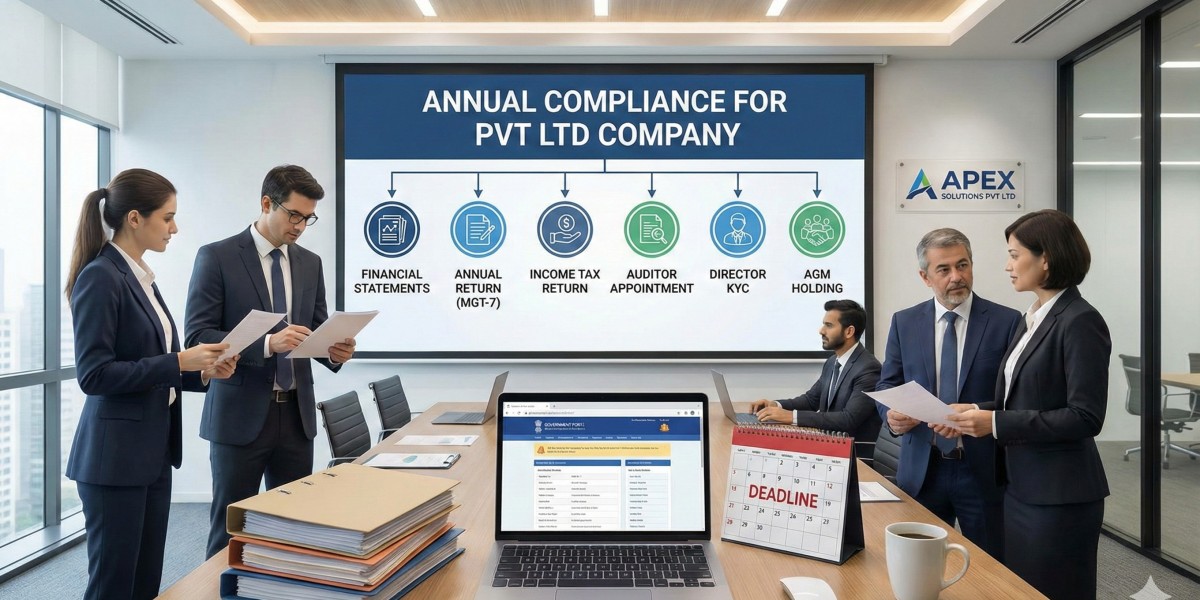

Running a private limited company in India comes with structured legal and regulatory responsibilities. One of the most important obligations is completing annual compliance for pvt ltd company in a timely and accurate manner. These compliances are mandated under the Companies Act, 2013 and regulated by the Ministry of Corporate Affairs (MCA).
In this comprehensive guide, we will explain everything you need to know about annual compliance for pvt ltd company, including statutory filings, due dates, penalties, audit requirements, and best practices to stay compliant. This article is brought to you by Legal-N-Tax, committed to spreading awareness about corporate legal responsibilities.
What is Annual Compliance for Pvt Ltd Company?
Annual compliance for pvt ltd company refers to the mandatory filings and regulatory requirements that every private limited company must fulfill each financial year, regardless of turnover or profit.
Even if a company has:
No business transactions
No revenue
No active operations
It must still comply with annual statutory requirements.
Failure to comply can lead to:
Heavy penalties
Director disqualification
Company strike-off
Legal action
Therefore, understanding annual compliance for pvt ltd company is essential for every director and shareholder.
Governing Law for Annual Compliance
The primary law governing annual compliance for pvt ltd company is the Companies Act, 2013. The compliance filings are made through the MCA portal maintained by the Ministry of Corporate Affairs.
Key objectives of annual compliance include:
Ensuring financial transparency
Protecting shareholder interests
Maintaining statutory records
Reporting company performance to authorities
Mandatory Annual Compliance for Pvt Ltd Company
Below are the major annual compliance requirements every private limited company must complete:
1. Board Meetings
A private limited company must hold:
Minimum 4 Board Meetings in a year
Maximum gap between two meetings should not exceed 120 days
Minutes of meetings must be recorded and maintained in statutory registers.
2. Annual General Meeting (AGM)
Every private limited company must conduct an Annual General Meeting:
Within 6 months from the end of the financial year
For newly incorporated companies: within 9 months from the end of the first financial year
During the AGM:
Financial statements are approved
Auditor is appointed or reappointed
Dividend (if any) is declared
3. Filing of Financial Statements – Form AOC-4
Every company must file its financial statements with the Ministry of Corporate Affairs in Form AOC-4.
Financial statements include:
Balance Sheet
Profit & Loss Account
Director’s Report
Auditor’s Report
Cash Flow Statement (if applicable)
Due Date:
Within 30 days of holding the AGM
This is one of the most crucial parts of annual compliance for pvt ltd company.
4. Filing of Annual Return – Form MGT-7 / MGT-7A
Annual Return contains details of:
Shareholding pattern
Directors and KMP details
Registered office address
Indebtedness
Share transfers
Due Date:
Within 60 days of AGM
Small companies may file MGT-7A (simplified form).
5. Income Tax Return Filing
Apart from MCA compliance, every private limited company must file its Income Tax Return annually under the Income Tax Act, 1961.
Due Dates:
31st October (if audit applicable)
31st July (if no audit required)
Even if there is no income, filing is mandatory.
6. Statutory Audit
Every private limited company must appoint a Chartered Accountant as auditor within 30 days of incorporation.
Audit is mandatory irrespective of:
Turnover
Profit
Business activity
The auditor verifies:
Books of accounts
Financial statements
Statutory compliance
Audit report is attached while filing AOC-4.
7. Director KYC – DIR-3 KYC
Every director holding a DIN must complete annual KYC filing.
Due Date:
30th September each year
Failure leads to:
DIN deactivation
Late fees penalty
8. Maintenance of Statutory Registers
Companies must maintain:
Register of Members
Register of Directors
Register of Charges
Minutes Book
Share Certificate records
These may not require annual filing but must be properly updated and maintained.
9. Event-Based Compliances (If Applicable)
Certain compliances are event-driven, such as:
Change in directors
Increase in authorized capital
Transfer of shares
Change in registered office
Issue of new shares
Though not annual, they must be completed within prescribed timelines to avoid penalties.
Due Dates Summary Table
Here’s a simplified overview of annual compliance for pvt ltd company:
| Compliance | Form | Due Date |
|---|---|---|
| AGM | — | Within 6 months from FY end |
| Financial Statements Filing | AOC-4 | Within 30 days of AGM |
| Annual Return | MGT-7 / 7A | Within 60 days of AGM |
| Director KYC | DIR-3 KYC | 30th September |
| Income Tax Return | ITR-6 | 31st July / 31st October |
Penalty for Non-Compliance
Failure to complete annual compliance for pvt ltd company can result in:
1. Late Filing Fees
₹100 per day per form
No maximum cap for many forms
2. Director Disqualification
If annual returns are not filed for 3 consecutive years, directors may be disqualified under the Companies Act, 2013.
3. Company Strike-Off
The Registrar of Companies (ROC) may remove the company name from the register if it fails to comply.
4. Additional Legal Consequences
Prosecution
Financial penalties
Restrictions on borrowing
Inability to close funding rounds
Non-compliance can seriously affect the credibility and operational ability of the company.
Why Annual Compliance is Important
Completing annual compliance for pvt ltd company is not just a legal formality; it offers several benefits:
1. Builds Business Credibility
Regular filings demonstrate transparency to:
Investors
Banks
Financial institutions
Government authorities
2. Helps in Fundraising
Investors conduct due diligence before investing. Non-compliance can immediately discourage funding.
3. Avoids Heavy Penalties
Timely compliance prevents unnecessary late fees.
4. Ensures Smooth Business Operations
Proper documentation ensures smoother:
Loan applications
Tender participation
Mergers & acquisitions
Business expansions
Common Mistakes in Annual Compliance for Pvt Ltd Company
Many companies face penalties due to avoidable errors such as:
Missing AGM deadlines
Incorrect shareholding details
Not updating director KYC
Filing forms with wrong digital signatures
Ignoring compliance due to zero turnover
Understanding these common pitfalls helps businesses stay ahead.
Compliance for Dormant or Inactive Companies
Even if your company:
Has no transactions
Has not started business
Is temporarily inactive
Annual compliance for pvt ltd company is still mandatory.
Alternatively, companies may apply for dormant status to reduce compliance burden, but filings are still required in limited capacity.
Step-by-Step Process of Annual Compliance
Here is a simplified process flow:
Finalize books of accounts
Conduct statutory audit
Hold Board Meeting
Conduct AGM
File AOC-4
File MGT-7/MGT-7A
File Income Tax Return
Complete Director KYC
Planning compliance activities in advance prevents last-minute rush.
Documents Required for Annual Compliance
Typically required documents include:
Financial statements
Bank statements
Shareholding details
Director details
PAN and TAN information
Digital Signature Certificates (DSC)
Maintaining proper records throughout the year simplifies the compliance process.
How Legal-N-Tax Helps in Annual Compliance
At Legal-N-Tax, we understand that managing annual compliance for pvt ltd company can be complex and time-consuming. Our team ensures:
Accurate preparation of financial statements
Timely MCA filings
Audit coordination
Income tax filing
Director KYC assistance
Continuous compliance monitoring
We aim to make compliance smooth, structured, and stress-free for business owners.
Frequently Asked Questions (FAQs)
Is annual compliance mandatory even if the company has no turnover?
Yes. Annual compliance for pvt ltd company is mandatory regardless of turnover or business activity.
Can a company skip audit if there is no revenue?
No. Audit is compulsory for all private limited companies.
What happens if forms are filed late?
Late fees of ₹100 per day apply, along with possible penalties and legal consequences.
Is income tax filing separate from MCA compliance?
Yes. Income tax return is filed separately under the Income Tax Act, 1961.
Conclusion
Annual compliance for pvt ltd company is a critical responsibility that every private limited company must fulfill each financial year. From holding board meetings and conducting AGMs to filing financial statements and income tax returns, every step must be completed within prescribed timelines.
Non-compliance can lead to severe penalties, director disqualification, and even company strike-off. Therefore, businesses must treat compliance as a strategic priority rather than a mere statutory formality
With proper planning, timely documentation, and professional guidance from experts like Legal-N-Tax, companies can ensure smooth compliance and focus confidently on growth and expansion.
.