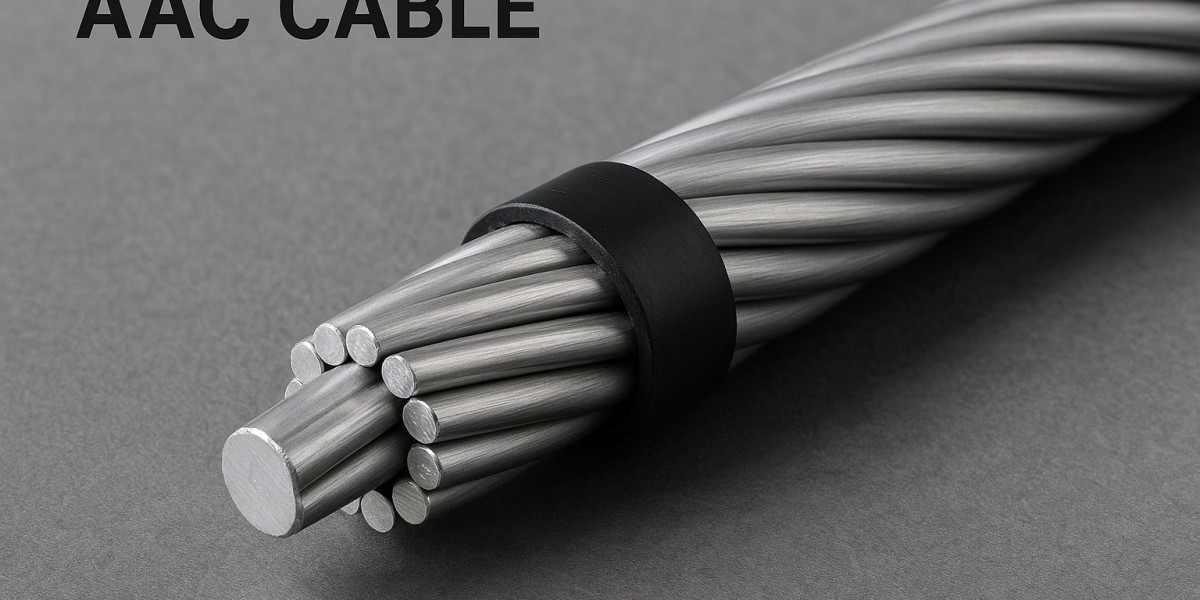

When it comes to efficient and cost-effective power transmission, the choice of conductor plays a crucial role. AAC cable (All Aluminum Conductor) is a popular solution for overhead power distribution, offering excellent conductivity, lightweight design, and long-term durability. At HNBF Power, we specialize in manufacturing high-quality AAC cables that meet global standards and cater to utilities, EPC contractors, and industrial power projects worldwide.
What is AAC Cable?
AAC stands for All Aluminum Conductor, which is a type of overhead conductor made entirely of high-purity aluminum. Unlike ACSR (Aluminum Conductor Steel Reinforced), AAC cables do not contain a steel core, making them lighter and easier to handle. This makes AAC ideal for short to medium-span overhead transmission lines where tensile strength requirements are moderate.
Key characteristics of AAC cables include:
High conductivity due to pure aluminum strands
Lightweight construction for easier installation
Corrosion resistance for long service life
Cost-effective solution for medium-voltage distribution networks
Why Choose AAC Cables for Power Distribution
AAC cables are widely used in urban and rural electrification projects, industrial power supply lines, and utility networks. Here are some advantages that make AAC a preferred choice:
1. High Electrical Conductivity
Aluminum, the primary material of AAC cables, offers excellent electrical conductivity. This ensures minimal energy loss during transmission, improving efficiency and reliability of power distribution systems.
2. Lightweight Design
Being entirely aluminum, AAC cables are significantly lighter than ACSR or copper-based conductors. This reduces the load on towers and poles, lowers installation costs, and simplifies maintenance operations.
3. Corrosion Resistance
AAC cables are resistant to corrosion and oxidation, which is especially important in areas with high humidity or industrial pollution. This property ensures long-term durability and reduces maintenance costs.
4. Cost Efficiency
Aluminum is more economical than copper, and the absence of a steel core reduces material costs. AAC cables provide a balance between performance and affordability, making them ideal for large-scale distribution projects.
HNBF Power AAC Cable Offerings
At HNBF Power, we manufacture AAC cables in various sizes and specifications to meet diverse project requirements. Our products adhere to international standards, ensuring consistent quality and performance.
Stranding Options: Multiple-strand configurations for different current ratings
Voltage Ratings: Suitable for low, medium, and high-voltage distribution networks
Compliance: Manufactured in accordance with IEC and ASTM standards
Custom Solutions: Tailored conductor sizes, packaging, and lengths for specific projects
Our AAC cables are designed for reliability, efficiency, and long-term operational excellence, making them a trusted choice for engineers and procurement teams globally.
Applications of AAC Cables
AAC cables are versatile and suitable for a wide range of overhead power distribution applications:
Urban and rural power distribution lines
Industrial power supply networks
Residential and commercial electrification projects
Temporary power supply for construction sites
Their lightweight and corrosion-resistant design makes them especially useful in environments where durability and easy installation are critical.
FAQs About AAC Cables
Q1: How does AAC cable differ from ACSR cable?
A: AAC cables are made entirely of aluminum, while ACSR cables have a steel core for added tensile strength. AAC is lighter and ideal for short to medium spans, whereas ACSR is preferred for longer spans and higher mechanical load requirements.
Q2: What is the typical lifespan of an AAC cable?
A: With proper installation and maintenance, AAC cables can last 25–30 years or more, depending on environmental conditions.
Q3: Can AAC cables be used in high-voltage transmission lines?
A: AAC cables are mainly suitable for low to medium voltage distribution lines. For high-voltage or long-span applications, ACSR or AAAC cables are recommended.
Q4: Are AAC cables easy to install?
A: Yes, their lightweight design reduces installation complexity, labor costs, and load on supporting structures.
Q5: Does HNBF Power offer customized AAC cable solutions?
A: Absolutely. We provide tailored conductor sizes, stranding, and lengths to meet specific project requirements.
Partner with HNBF Power for High-Quality AAC Cables
For reliable, efficient, and durable overhead power distribution, HNBF Power is your trusted partner. Our AAC cables combine lightweight design, superior conductivity, and long-term corrosion resistance, making them an ideal choice for utilities, EPC contractors, and industrial projects.
Contact HNBF Power today to discuss your requirements and get customized AAC cable solutions designed to meet your unique project needs.