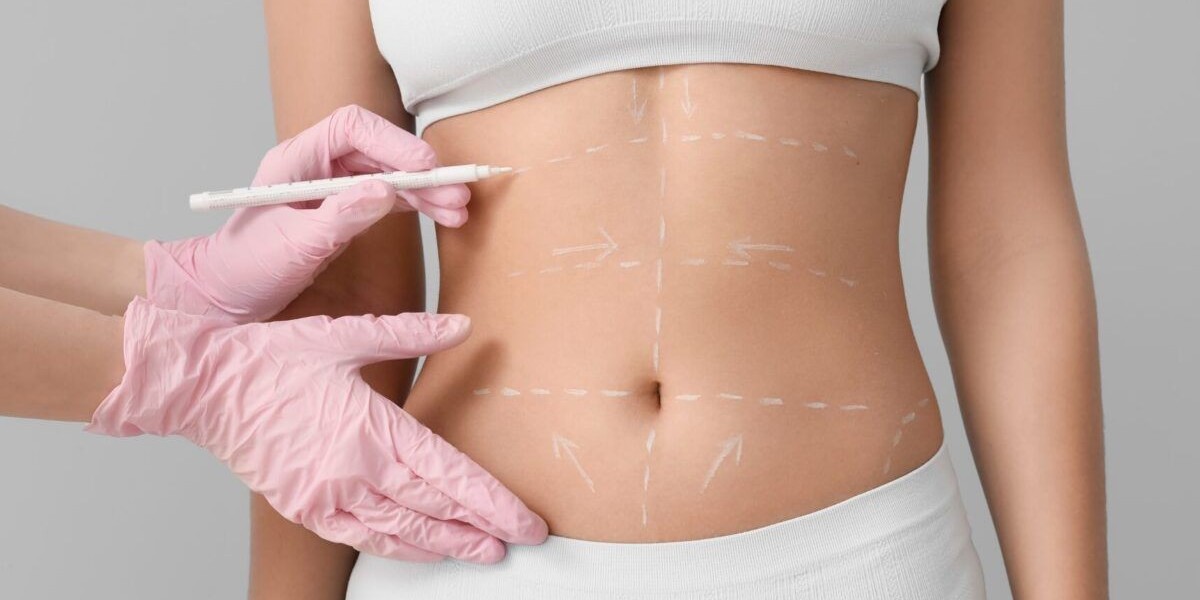

When we discuss body contouring in a modern clinical setting, we often distinguish between "volume issues" and "structural failures." For many patients, the frustration of a protruding lower belly isn't about fat—it is about the loss of tension in the abdominal wall. A Mini Abdominoplasty in Dubai is the surgical answer to this specific structural lapse. It is a high-precision intervention designed to recalibrate the tension of the lower third of the torso, providing a level of firmness that non-invasive skin tightening or liposuction simply cannot replicate.
In the specialized landscape of 2026 aesthetic medicine, the "Mini" has moved away from being a "minor" surgery to becoming a "targeted" one. It is used for the patient who has a stable BMI and good upper abdominal tone but suffers from what we call "infra-umbilical laxity." This is the physical reality where the skin and the underlying fascia below the navel have been stretched beyond their elastic limit. By focusing the surgical energy strictly on this zone, we can achieve a flat, athletic profile with a significantly reduced recovery period and a discreet, low-slung incision.
The Physics of the "Lower Pouch" Phenomenon
To understand why a Mini Abdominoplasty in Dubai is necessary, one must look at the anatomy of the lower abdomen. This area is uniquely susceptible to gravity and structural changes. Unlike the upper abdomen, which is somewhat supported by the ribcage, the lower abdomen relies entirely on the strength of the rectus abdominis muscles and the integrity of the skin's collagen matrix.
When this area undergoes significant stretching—whether through pregnancy or a weight fluctuation of 10 to 15 kilograms—the collagen fibers can snap. Once they reach this point of "plastic deformation," they no longer have the "snap-back" quality required to stay flat against the muscle. This results in the "pouch" or "shelf" that many patients find so resistant to exercise. The mini tuck solves this by physically removing the damaged tissue, effectively resetting the tension of the entire lower abdominal plane.
Internal Architecture: The "Internal Brassiere" Technique
One of the most misunderstood aspects of the mini procedure is the role of muscle repair. While a full abdominoplasty involves a complete "zipping up" of the muscles from the sternum to the pubis, the mini version focuses on the lower fascial integrity. In 2026, many surgeons utilize "progressive tension" or "internal brassiere" suturing. This involves using permanent, high-tensile sutures to pull the lower muscle fascia together, creating a firm internal foundation.
This internal work is critical because it addresses the "bulge" from the inside out. Even if a patient has very little fat, separated lower muscles (diastasis recti) will cause the belly to protrude. By reinforcing this specific zone, the surgery doesn't just make the skin look better; it restores the functional strength of the lower core. This improvement in internal tension often leads to secondary benefits, such as improved posture and a reduction in lower back strain, as the body's natural "corset" is reinstated.
Surgical Discretion: Navigating the 2026 Bikini Line
A major driver for the Mini Abdominoplasty in Dubai is the demand for "invisible" results. In an era of high-definition aesthetics, a hip-to-hip scar is often an unacceptable trade-off for patients with only moderate concerns. The mini tuck addresses this through a significantly shorter incision, usually ranging from 10 to 15 centimeters.
The placement of this incision is a matter of mathematical precision. It is positioned roughly 6 to 7 centimeters above the pubic cleft, ensuring it remains well within the boundaries of even the most minimalist swimwear. Furthermore, because the belly button is not detached or repositioned, there is no circular scar in the middle of the abdomen. This allows the patient to maintain their natural "umbilical signature," which is often the most significant "tell" of having had a traditional tummy tuck.
Who Benefits from Zone-Specific Contouring?
The "Mini" is a procedure of exclusion—it is for those who do not require a full reconstruction. Identifying the right candidate is the most important step in the clinical consultation process.
| Clinical Marker | The Mini Tuck Indicator |
| Skin Quality | Loose, crepey, or hanging skin only below the navel. |
| Muscle Gap | Mild separation or "poofiness" in the lower belly. |
| Umbilical Position | The navel is already at an aesthetically high and central point. |
| Scar History | Can be used to excise and replace an old, indented C-section scar. |
| Recovery Goals | Patient requires a return to high-level activity within 3 weeks. |
The Clinical Workflow: A Modern Approach
The process of a Mini Abdominoplasty in Dubai has been streamlined to maximize safety and minimize the inflammatory response.
High-Definition Marking: The surgical plan is drawn while the patient is upright, identifying the exact "vector of pull" needed to flatten the skin without distorting the surrounding tissue.
Tissue-Saring Dissection: The surgeon lifts the skin and fat only as high as the navel, preserving the lateral blood vessels and nerves that would be disrupted in a full tuck.
Fascial Reinforcement: The lower muscles are tightened with internal sutures, creating a flat "base."
Strategic Excision: Only the redundant, damaged skin is removed. In many cases, this removes the most concentrated area of stretch marks.
Multi-Vector Closure: The incision is closed in layers to redistribute tension away from the skin surface, resulting in a flatter, thinner scar over time.
Managing the "Mommy Shelf" and C-Section Scars
For many patients, the motivation for a mini tuck is specifically to address the "C-section shelf." This occurs when the surgical scar from childbirth becomes tethered to the underlying muscle, causing the skin above it to hang over like a ledge. A Mini Abdominoplasty in Dubai is the definitive treatment for this. The surgeon can enter through the old scar line, release the tethering, and remove the "shelf" of skin in one motion. This not only flattens the stomach but also replaces a potentially thick, indented scar with a clean, professionally closed surgical line.
Recovery: The Reality of the First 21 Days
Because a mini tuck is less invasive, the "healing curve" is much steeper than a traditional tuck. However, it still requires a disciplined 2026-standard recovery protocol.
The First 48 Hours: The primary goal is managing the "tight" sensation. Walking is encouraged immediately to promote lymphatic drainage.
Days 3 to 7: Most patients transition from clinical discomfort to a sensation of "deep muscle soreness," similar to an intense gym session.
The Two-Week Mark: This is often the "turning point" where swelling begins to drop noticeably, and patients feel comfortable returning to non-strenuous professional roles.
Day 21: Most restrictions on light cardiovascular activity are lifted, and the body begins the "remodeling phase" where the incision starts to flatten and fade.
Longevity and the Role of Collagen Maintenance
A Mini Abdominoplasty in Dubai provides a permanent change to the body's structure by removing physical tissue. However, the quality of the long-term result depends on the patient's lifestyle. We emphasize the "Three Pillars of Maintenance": stable weight, core engagement, and skin health. While the skin that was removed is gone forever, significant weight gain can stretch the remaining skin. By maintaining a stable weight and a consistent fitness routine, patients can ensure that their flat, contoured result remains intact for decades.
Safety and Medically Responsible Expectations
Every surgical procedure carries a profile of risk, and the "Mini" is no exception. While complications like seroma (fluid buildup) are much less common than in full abdominoplasty, they are still managed through the use of compression garments. Patients should expect temporary numbness in the lower skin area, which is a normal part of the nerve healing process. Our priority is to provide a transparent, medically grounded experience where the patient's safety and long-term satisfaction are the only metrics of success.
Conclusion
The decision to undergo a Mini Abdominoplasty in Dubai is a decision to invest in the structural integrity of your body. It is a procedure that honors your existing fitness and focuses exclusively on fixing what exercise cannot—the physical redundancy of overstretched skin and lax fascia. By choosing a targeted approach, you can reclaim a flat, confident midsection with a faster recovery and more discreet results. For a detailed anatomical assessment and to see if this precision-focused approach fits your goals, we invite you to consult with the experts at Tajmeels Clinic.